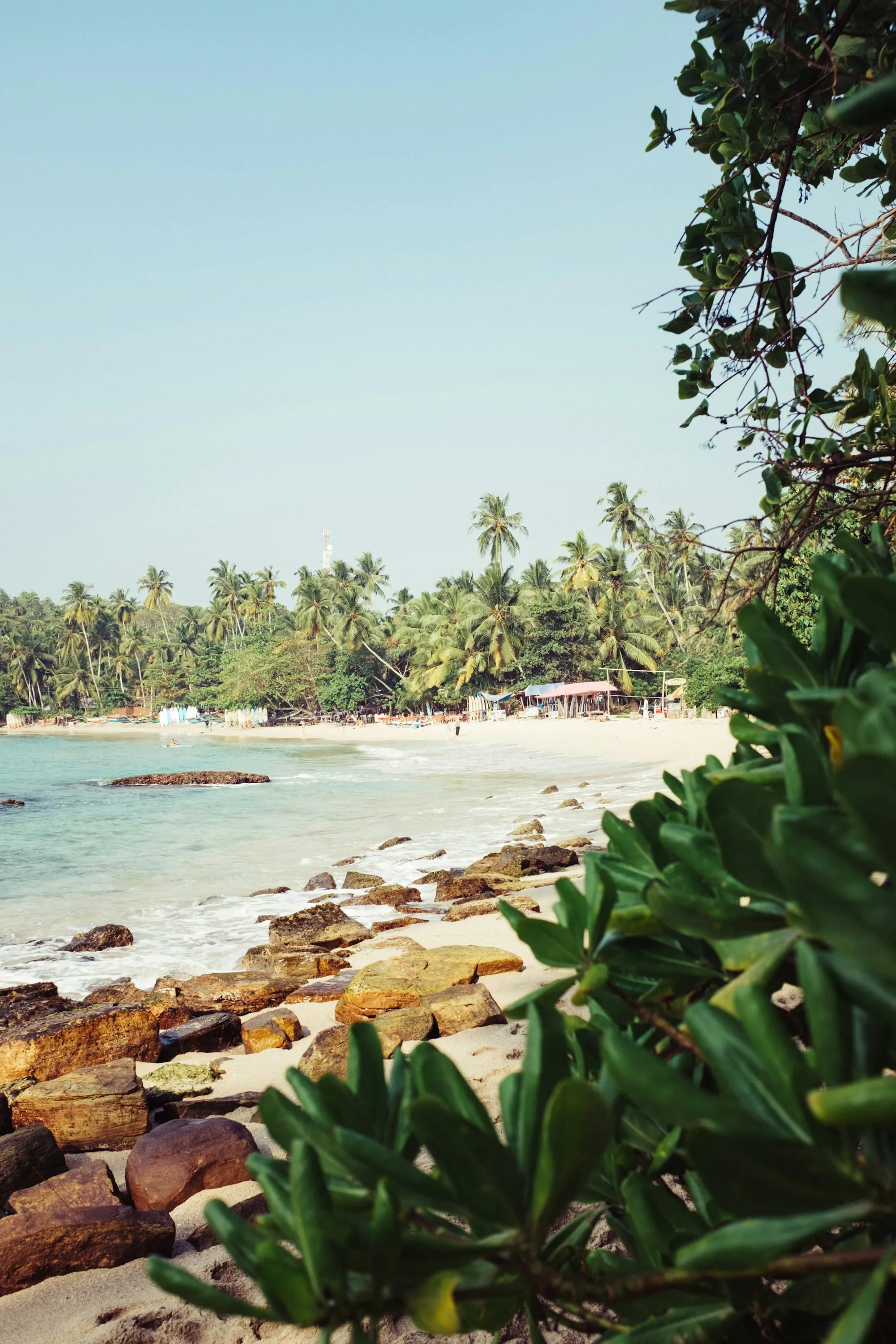
The coast around Hiriketiya is a string of small bays between rocky, jungle-covered headlands. Hiriketiya Bay is the famous one, but within a few kilometres there are beaches for every kind of day:
- Surf, cafés and people: Hiriketiya Bay.
- A walk on a sandbar and snorkelling: Blue Beach Island in Nilwella.
- Space and sunsets: Dickwella Beach.
- A quiet day away from it all: Talalla, Silent Beach or Goyambokka.
The sea is usually calmest from December to April. During the southwest monsoon, from May to October, it is rougher, and some beaches are better for looking at than swimming. See the 7-day forecast for the waves and wind on the day.
Hiriketiya Bay
A horseshoe-shaped bay backed by jungle, and the reason most people come to this part of the coast. It has two surf breaks:
- The beach break, on the western side over sand, is the gentler one. Surf schools and board rental shacks are at that end of the beach, and it is where beginners learn.
- The reef break is a fast left off the eastern headland. It is shallow, with sea urchins on the reef, so leave it to experienced surfers.
On calmer days you can swim inside the bay – keep away from the surfers and watch for currents. The bay gets very busy from December to April, with crowded line-ups and full cafés. Come early in the morning if you want it quieter.
Blue Beach Island, Nilwella
A small rocky island joined to the beach by a sandbar, with the sea on both sides. It is about 2 km east of Hiriketiya by road – 10–15 minutes by tuk-tuk or about 30 minutes on foot. You can walk out around low tide, and on flat days the calmer side is good for snorkelling. There are no lifeguards and no facilities. Everything you need to know is in the Blue Beach Island guide.
Nilwella Beach
The beach on the Nilwella side, by the fishing harbour and the sandbar out to Blue Beach Island – sometimes simply called Blue Beach. It is quieter than Hiriketiya, with fishing boats pulled up on the sand. Currents and the tide can make swimming tricky, so it is better for a walk, a king coconut and the sunset. More in Nilwella Beach.
Dickwella Beach
Just west of Hiriketiya, Dickwella Beach – also called Pehembiya or Pehebiya – is a longer, roomier stretch of pale sand. It is about 1 km from Hiriketiya Bay, a 10–15-minute walk. It is quieter than Hiriketiya and a favourite for sunsets; the cocktail bar Smoke & Bitters is on this beach.
A reef offshore can calm the shallows on settled days, but it is open sea and there are no lifeguards. Facilities are fewer than in Hiriketiya, so bring water and cash.
More beaches nearby
- Bathigama Beach, about 3 km west by road: a quiet bay with rocks and coral rubble in the shallows – wear water shoes.
- Kudawella Beach, about 5 km east by road: the beach by Kudawella’s fishing harbour. It is about 1 km from the Hummanaya Blowhole, so the two make a good half-day together.
- Talalla, about 10 km west by road: a crescent-shaped beach almost a kilometre long, with small boutique hotels and yoga retreats. It is one of the quietest beaches on this stretch of coast.
- Silent Beach and Goyambokka, about 12–13 km east by road, just west of Tangalle: two small, palm-lined coves. Goyambokka sits in a sheltered bay and can be good for swimming when the sea is calm – but reports vary, so check conditions on the day.
Which beach near Hiriketiya is best for swimming?
It depends on the day. There are no lifeguards on most of these beaches, and conditions change with the swell and the season. On calm days, the inside of Hiriketiya Bay and the shallows at Dickwella Beach are the easiest places to swim. At Blue Beach Island, only swim on the calmer side and only when the sea is flat. Skip swimming after heavy rain, when the water turns murky, and whenever the waves are big.